
Fire Door Inspections and Field Labeling
09 Oct 2026
Common Inspection Issues, Field Modifications and Field Labeling
Fire doors are part of a building’s passive fire protection system and help limit fire spread through rated openings. Assemblies designed for smoke and draft control also help limit smoke movement. NFPA 80 addresses the installation, inspection, and maintenance of fire doors and other opening protectives.
Over time, doors and frames can be painted, repaired, modified, or damaged. Hardware and glazing may be replaced, and certification labels can become unreadable or go missing. Inspection can identify those conditions, and field evaluation can determine whether a door or frame qualifies for labeling.
What Fire Door Inspectors Review
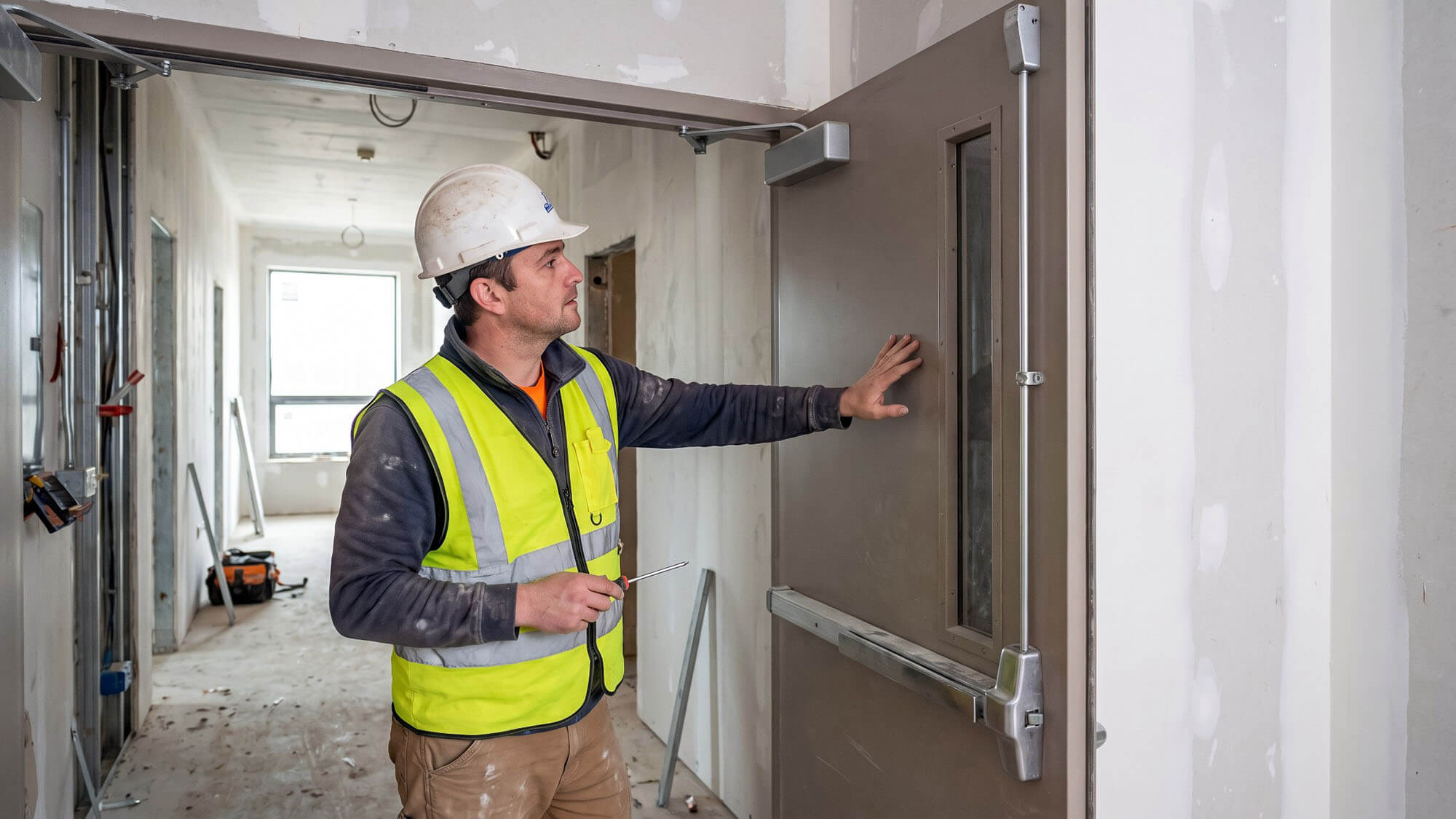
A fire door inspection goes beyond confirming that a door closes and latches. Inspectors review the condition and operation of the entire opening, including labels, doors and frames, glazing, hardware, clearances, and closing and latching devices.
They also look for open holes or breaks, missing or damaged parts, and field modifications that may affect the listed assembly. A door can appear functional while another part of the opening no longer matches the listed construction or applicable requirements.
Intertek’s process uses applicable NFPA requirements and current and historical listing information to evaluate existing doors and frames.
Labels and Certification
A fire door label provides information tied to the product’s certification. Modern fire door labels will include the fire protection rating, test standard(s), certification mark, manufacturer or machiner (logo, name, or numerical code), and traceability information. It may also include a temperature-rise rating, smoke and draft designation, or information about fire exit hardware.
In North America, applicable test standards can include NFPA 252, UL 10B, UL 10C, and CAN/ULC 104. For Intertek-certified products, the certification label may display the Warnock Hersey (WH) Mark.
Labels must remain visible and legible, but painting, refinishing, repairs, and years of use can obscure them. A painted label is not automatically unacceptable if the required information remains readable and verifiable, but a missing or unreadable label may require further evaluation.
When Field Labeling Is Used
Field labeling begins with an evaluation of the existing opening. Reasons for evaluation include missing, incorrect, or obscured labels and modifications made after installation outside of what is permitted to be done at the job site by NFPA 80.
The field representative reviews the door or frame, applicable components, available documentation, and prior modifications, then compares the installed condition with applicable listing and certification information.
If deficiencies are identified, corrective work may be required before labeling can proceed. The opening can be reinspected after that work is completed. If the door or frame qualifies, Intertek can apply the appropriate fire-rating label bearing the WH Mark.
Field labeling is not just replacing a missing label. The door or frame must be eligible for the certification and rating being requested and the opening must comply with the requirements of NFPA 80.
Field Modifications and Deficiencies
Changes to fire door assemblies can include drilled holes, replacement hardware or glazing, and added access control equipment, protection plates, or other components.
Some work may fall within permitted job-site preparations. For modifications outside those allowances, the listing agency should be contacted before work begins to determine whether evaluation, testing, or another action is needed. The manufacturer’s listing may also include allowances or limitations for field preparations.
Inspection findings are not limited to labeling. Common deficiencies can include excessive clearances, damaged components, missing hardware, open holes, improper modifications, glazing issues, and closing or latching problems, including interference from hardware.
When Replacement May Not Be Necessary
Field labeling can provide an alternative to replacement when an existing door or frame is found eligible for certification.
Not every opening will qualify. Product identification, available documentation, listing history, previous modifications, condition, and required rating all affect the evaluation. Some may qualify after corrective work and reinspection; others may require additional evaluation or replacement.
Building teams can reduce future inspection issues by protecting labels during painting or refinishing, reviewing proposed modifications before work begins, and keeping inspection reports, product information, and repair or modification records.
Intertek provides fire door inspection and field-labeling services for new construction, existing buildings, and renovation projects across healthcare, hospitality, education, government, commercial, and industrial facilities.

You may be interested in...
Fire Doors Testing Solutions
Mitigate threats of property damage and loss of life with fire door testing. We help meet expected fire rating and specified fire door requirements like NFPA 80.

Field Labeling of Fire Doors
Intertek performs Fire Door Certification and Labeling in the field with Inspection services to help ensure your fire door assemblies are code compliant and in working order.